-
 3952 Lyndale Ave S, Minneapolis, MN 55409
 -
 (866) 948-6145
- 9:00 AM – 9:00 PM
3952 Lyndale Ave S, Minneapolis, MN 55409
(866) 948-6145
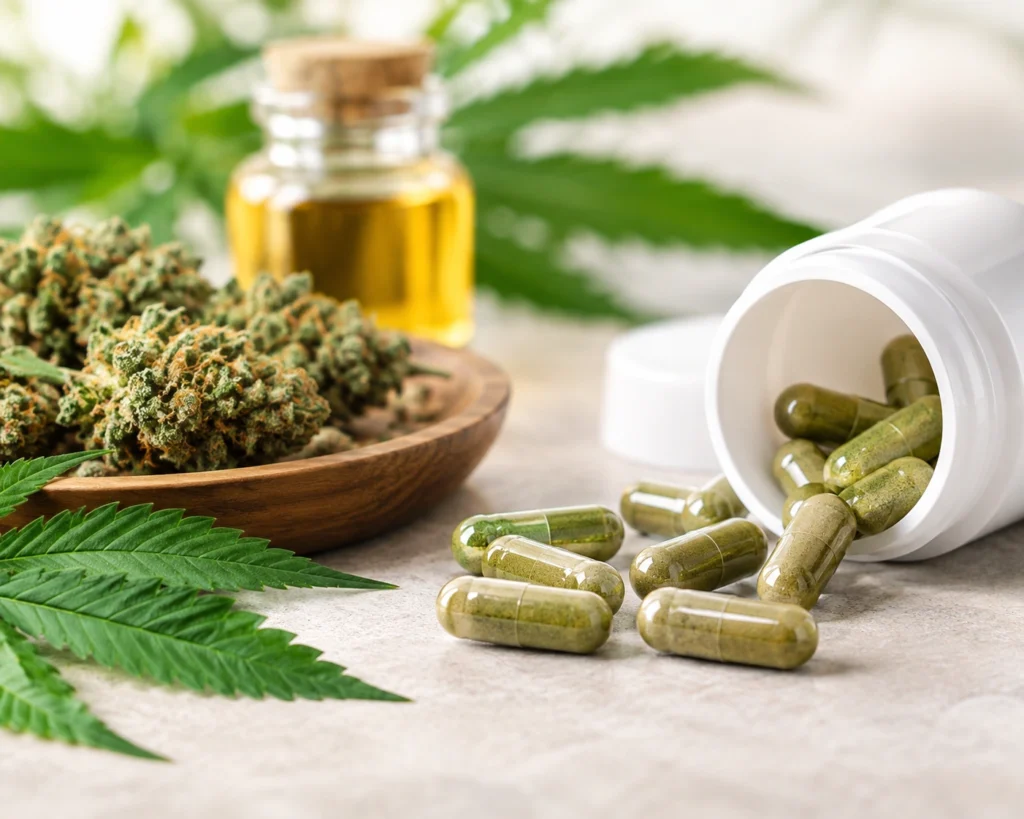
Cannabis capsules are an alternative method of ingesting cannabinoids that does not involve smoking or vaporization. In contrast to inhaled cannabis, an orally administered capsule undergoes the process of digestion before the cannabinoids enter the blood stream. These differences affect the onset, duration, and predictability of the effect.
The key challenge for someone interested in cannabis capsules is not merely how to encapsulate cannabis oil. It involves understanding the concepts of potency, activation, absorption, storage, and personal safety. The goal of this guide is to provide the information on these topics in a practical and scientifically grounded manner.
Understand how cannabis capsules work, what affects their effects, and how to use them responsibly.
Cannabis capsules are oral drug delivery systems that consist of an extract or infused oil or any other form of cannabinoids in a capsule. The capsule contains either THC, CBD, other cannabinoids, or all of them in one product.
Capsules are ingested orally, so cannabis capsules have to be processed by the digestive system and liver. Studies conducted on oral THC indicate great variation in the bioavailability of the compound from one drug formulation to another. Moreover, peak plasma levels occur later compared to inhaled cannabis.
That makes cannabis capsules different from fast-acting products since it takes some time to experience an effect, although the dose has already been administered.
When the THC is inhaled, it enters the blood stream via the lungs quickly. When it comes to cannabis capsules, then the THC is required to be processed by the digestive system and hepatic metabolism before entering the bloodstream.
The first-pass effect is a reason why the consumption of oral THC could be felt differently from inhaled cannabis. One will have a delay in the onset, which can lead to taking another dose earlier and thus increasing the risk of being intoxicated by mistake.
According to the CDC, edible cannabis takes about 30 minutes to 2 hours to start working.
The cannabis flowers have mostly been found to contain cannabinoids in their acid form, including THCA. Decarboxylation occurs due to heating and involves the removal of the carboxyl group to convert THCA to THC. This is important in cases where cannabis is meant for oral consumption, as the cannabinoid composition of the cannabis will be affected.
Activation does not necessarily mean subjecting cannabis to high temperatures. The cannabinoids are easily destroyed by excessive heat, oxygen, and light.
For those involved in making cannabis capsules, the message is to avoid applying excessive heat but rather use a validated method of preparation.
One of the most critical factors in relation to cannabis capsules is potency. Just because a flower is marked by a certain percentage of THC does not imply that each milligram of the final product contains this amount of THC.
There are a number of possible variables, including the initial product, its extraction, decarboxylation, losses during the process of handling, and the quantity of the oil used as the base. According to the CDC, even commercially produced products may mislabel the THC content.
Mathematical calculations might serve as a starting point for your consideration but are not a lab testing of the product.
THC and CBD are both highly lipophilic substances, which means that they easily dissolve in fat and oil but not in water. That is why cannabis extracts for oral consumption are often dissolved in carrier oils.
However, a carrier oil is not everything because there are various physiological aspects that can influence the absorption of cannabinoids.
That is why even two people who have ingested an apparently equal dose of THC can have a significantly different effect.
When it comes to cannabis pills, the approach to dosing needs to be quite cautious. There are no standardized doses, as none will give the same results for all people.
The inexperienced use of oral THC usually leads to making a mistake when increasing the dose due to the lack of effect after the first one. In case of oral cannabis intake, patience becomes very necessary.
In addition, there should be no assumptions about how much it takes to get the desired dose when taking the same amount through inhalation. Pharmacokinetics of this substance changes during oral administration and can lead to formation of active metabolites.
Any medical use of cannabis requires consultations from a medical professional.
Capsules containing cannabis may be more attractive to individuals looking for a means of consuming cannabinoids that is both smoke-free and inconspicuous. Furthermore, cannabis capsules may offer an improved level of standardization compared to smoking loose flower and using self-produced cannabis oil.
Convenience is another benefit offered by cannabis capsules because they can be carried around easily, unlike cannabis smoke, which gives off an odor.
However, these benefits do not overcome the problems of oral administration.
Storage conditions may impact the integrity of cannabis capsules. Oxygen, heat, light, and moisture exposure may play a role in altering the chemistry of cannabis formulations. Previous pharmacokinetic studies show that THC degrades due to exposure to oxygen, heat, and light.
Thus, it is necessary to store cannabis capsules in accordance with the directions provided by the manufacturer. Home-made products require additional care due to their unstable nature and the potential risk of contamination.
Cannabinoid-containing products should be stored in tamper-proof containers out of reach of children and pets. Inadvertent intake is an important issue due to the fact that oral cannabis products look like common food.
Capsules made from cannabis are not harmless just because they are taken orally rather than smoked. THC can lead to impairment, altered perception, dizziness, anxiety, increased heart rate, and other side effects, especially when used in large amounts.
The same is true for CBD. According to the FDA, this substance can damage the liver, reduce alertness, and interact with other drugs.
Those who take prescription drugs are recommended to consult their healthcare provider prior to using any cannabinoid products. It is especially necessary in case a drug is processed by liver enzymes or has a narrow therapeutic index.
Another factor to consider is pregnancy and lactation. The FDA recommends avoiding use of THC, CBD, or marijuana in any forms during pregnancy and breastfeeding due to possible dangers.
Homegrown cannabis capsules have their own appeal, but the main drawback is the inability to accurately determine the amount of cannabinoids in them, their purity, their safety from bacteria or fungi and their stability.
The benefits of regulated products include the possibility to check for batch testing, labeling, and manufacturing control that would increase the predictability of cannabis capsules. In addition, there were worries from the FDA regarding quality and labeling of certain unregulated cannabinoid-containing products.
For medical purposes, predictability is especially important, as it will be easier to track any effect and discuss it with a doctor.
There are several things that could make oral cannabis unpredictable:
Consistency should be the primary aim for cannabis capsules, not strength.
The cannabis capsule is an excellent method of ingesting cannabinoids without smoking, but oral consumption involves other factors to consider that inhalation does not.
It is good to understand the concept of decarboxylation, but this alone is not sufficient to make a rational decision. The process of potency testing, proper dosing, proper storage, medication review, and recognizing that effects will be delayed are just as important.
For the person using cannabis for a medical purpose, the best plan of action is to select appropriate amounts that are easy to monitor and to consult with a competent healthcare professional regarding the use of cannabinoids. Making your own cannabis capsules is possible but far more difficult to accurately gauge potency and safety than purchasing tested products.
