-
 3952 Lyndale Ave S, Minneapolis, MN 55409
-
 (866) 948-6145
- 9:00 AM – 9:00 PM
3952 Lyndale Ave S, Minneapolis, MN 55409
(866) 948-6145
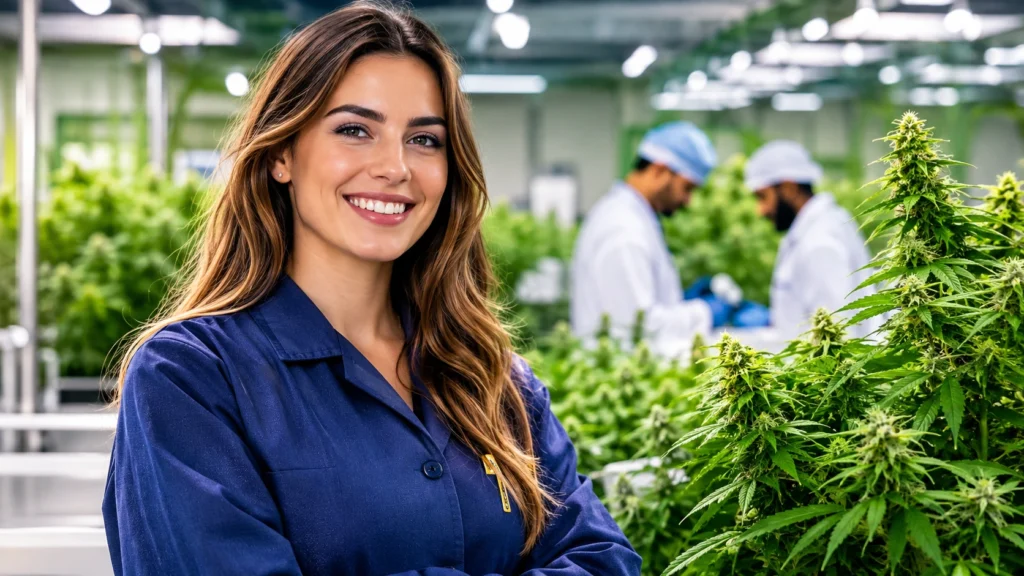
Career development in the legal cannabis industry has been made possible in such areas as agriculture, sales, manufacturing, healthcare, technology, marketing, and management. Companies in this industry require people from various sectors, and not necessarily those with hands-on experience with cannabis industry crops alone.
While joining the cannabis industry might be seen by most applicants as a chance to put their skills to test in an emerging and heavily regulated industry, getting a job in the cannabis industry requires more than just being excited about the industry.
If you have interest in cultivating, conducting research, dispensing, or other cannabis-related activities, you could benefit by knowing how the cannabis industry works.
Ready to Explore Opportunities in the Cannabis Industry?
Whether you’re interested in cultivation, dispensary work, research, or business management, understanding the legal requirements and available career paths is an important first step.
>>Get Started<<
There are plenty of opportunities for employment in the sector than one might expect. There are plenty of job positions in the cannabis industry value chain which include growing, processing, testing, packaging, delivering, and selling products.
The findings from the 2025 Vangst Jobs Report revealed that the number of employees in the legal cannabis industry market in the United States was approximately 425,002. The report revealed that there had been a decline in the number of jobs in 2024 by 3.4%.
This means that candidates have to be ready to face the realities of the market, as there are both opportunities and challenges.
The cannabis industry does not have one set career path that will guarantee success in your chosen occupation within the industry. Your chosen career path will depend on your level of education, personal interests, relevant professional experience, and the desired working environment.
Cultivation & Agriculture
Professionals who specialize in cannabis cultivation are individuals tasked with growing and tending to cannabis plants. The work entails:
Some of the jobs within this field include cultivation assistants, harvesters, and trimmers, while cultivation supervisors and facility managers are higher-level positions.
Manufacturing and Product Development
Companies that manufacture cannabis industry turn harvested material into products like extracts, oils, tinctures, and edibles.
Possible careers within this field include extraction technicians, production assistants, packaging staff, and manufacturing managers.
The occupations might require familiarity with production machinery, sanitation, quality assurance, and safety within the workplace. Some laboratory or extraction roles might require a technical education background.
Cannabis Laboratory Testing and Quality Assurance
The laboratories provide a platform where cannabis testing is carried out for issues such as potency, contamination, pesticide residue, and microbes.
Job prospects include:
Qualifications in the field of chemistry, biology, biotechnology, or lab science may prove advantageous. Technical roles might have certain education requirements.
Business, Marketing and Technology
All positions in the cannabis industry sector are not limited to work directly with plants or any product. Businesses hire employees in areas that are common in conventional businesses.
For instance:
The qualifications required vary from one employer to another, and also from one location to another. The qualifications needed by the employer vary depending on the nature of the work that needs to be done at each job position. Some of the entry-level jobs might just require someone reliable and skilled, while some of the specialized jobs will require formal education.
Some useful qualifications for employment include:
One of the most crucial steps in the application process is knowing about the employment regulations in your area.
In the cannabis industry, there are different regulations depending on the region. The cannabis itself is illegal according to the federal law in the USA, while each state has created its own medical or recreational program. This difference may influence the way of doing business and recruiting staff.
Depending on the state and position, the employer may demand:
Some states require that employees of cannabis businesses obtain an occupational license or worker identification badge, but the regulations might be different elsewhere.
Do not make assumptions based on just one state. Find information from the official cannabis regulating body of the area you wish to work in.
Competition in these sought after jobs means that candidates should do more than just show an interest in cannabis.
These skills can increase the competitiveness of job candidates:
Communication and Customer Service
Positions involving interaction with customers necessitate good communication skills. Candidates should be able to relay permissible product information, listen effectively, and answer customer queries.
Attention to Detail
Record keeping, accurate packaging, testing, and documentation are critical in such a regulated industry.
Technical Skills
Based on your field of choice, relevant knowledge will be such things as horticulture, laboratory techniques, production machinery, inventory software, and digital marketing skills.
Knowledge of Regulations
Local laws are especially helpful for you to know. Companies need employees who can comply with procedures regarding product handling, sales, documentation, and security.
Adaptability and Problem Solving
Market situations and laws can change. Employees who have skills in learning new procedures, communicating well, and solving problems responsibly are an asset to any organization.
It is necessary to take into account workplace safety when assessing your job prospects in the cannabis industry. Different types of workplaces face different kinds of dangers.
The cultivation facility might include exposure to pesticides, fertilizers, mold, high temperatures and humidity, and the necessity to perform physical work.
Manufacturing and extraction processes might include exposure to chemicals, machinery, ventilation issues, and flammable material.
There is information from the California Department of Industrial Relations that can help you learn about the workplace safety requirements for cannabis companies.
You will also find some information about the potential hazards for occupational health connected with cannabis production and distribution at the CDC’s National Institute for Occupational Safety and Health.
Ask about employee safety training, personal protective equipment, emergency response plans, and ways to report workplace injuries.
A properly structured resume can help the employer see how your experience relates to the job.
It is not essential that you have worked in the cannabis industry previously in order to qualify for a job candidate.
For instance:
Customize your resume for each application. Mention your training, certifications, practical experience, and accomplishments when you can.
It is possible to use strategic searching to improve the job search process.
Some ideas to consider include:
Employer career sites: Browse the official websites of licensed growers, producers, dispensaries, laboratories, and other businesses offering cannabis-related services.
Job sites specifically for cannabis industry careers: Such websites may provide a variety of positions within the cannabis industry located at various geographical locations and departments.
Networking: Professional events and organizations may provide connections with potential employers and professionals.
Traditional job sites: Sites like Indeed, for example, may feature vacancies in such areas as accounting, IT, marketing, logistics, HR and many others at cannabis companies.
Do not forget to confirm legitimacy of the potential employer before applying. Beware of scams and fraudulent activities such as payment of money in advance.
The compensation package depends on geographical location, professional experience, job duties, and the size of the company. Starting as a retail or production staff member will have different salary expectations than jobs in management, scientific, technical, or executive level positions.
Some aspects that affect salaries are:
One must be aware that entering the cannabis business does not automatically mean earning excessive amounts of money, because business failures and market competition could influence salaries and employment stability.
Career development involves transitioning from assistant jobs to management, supervision, compliance, or technical positions.
In case you want to begin your career in the marijuana field, the following tips may be helpful in terms of choosing reasonable options.
Decide on the direction of your future career: Cultivation, Retail, Manufacturing, Laboratory work, or any other one.
Find out more about the regulations in your area: What is the situation with employment, licenses, and age requirements?
Analyze your background: Do you have any skills that can be applied to the position?
Take the necessary training: It will help you find a good job easier and be qualified enough.
Find reasonable employers: Try to choose an already existing company.
Make sure that the companies are legal where necessary.
Improve your resume: It will help you get to the employer faster and with less effort.
Be ready for an interview: Make sure you know how to discuss compliance, customer services, safety, teamwork, and the responsibilities.
1. Do I need to have a degree to work in the cannabis industry?
No. Many entry-level positions do not require any university degree. Nonetheless, science-related, legal, medical, and some managerial positions may require a specialized degree or certificate.
2. Which occupations are typical for the cannabis industry?
The most common occupations in the industry are cultivation technician, budtender, dispensary manager, packager, extraction technician, lab employee, and compliance officer. Employers may also look for individuals in accountancy, marketing, IT, and human resources.
3. Is there a special license required by employees in cannabis?
Depending on the jurisdiction and occupation, it may be necessary to register the employees, provide them with identification badges, carry out background checks or training.
4. Can I start working in cannabis without any prior experience?
Yes. Some companies may provide you with an opportunity to start as an entry-level employee and undergo further training. Having experience in retail, agriculture, manufacturing, customer service, or administration can also be helpful.
To develop a career in the marijuana business requires finding the right career path, gaining the proper skills, and learning about regulations in your area. There are many different careers to pursue in the industry other than growing and dispensing marijuana, including scientific, manufacturing, marketing, financial, technological, and regulatory jobs.
The best method is to investigate potential employers, determine any licensing requirements, increase your qualifications, and then apply for positions suitable for your background. It is possible to find employment in this growing employment field.
1. Vangst — 2025 Cannabis Jobs Report
Read the report
Provides U.S. cannabis employment statistics, state-by-state job trends, and information about hiring conditions. The report estimates 425,002 full-time cannabis jobs in the U.S. and a 3.4% employment decline during 2024.
Vangst+1
2. UCLA Labor Center — High Stakes: The State of the California Cannabis Workforce (2025)
Read the report
Examines cannabis employment, worker experiences, training needs, wages, and workplace conditions in California.
UCLA Labor Center+1
3. CDC/NIOSH — Workplace Safety and Health Hazards in the Cannabis Industry
Read the official resource
Explains occupational hazards involving cultivation, processing, manufacturing, retail, and cannabis distribution.
CDC
4. California Department of Industrial Relations — Cannabis Industry Health and Safety
Read the official guidance
Covers employer responsibilities, employee protection, safety training, hazardous materials, equipment, and workplace injury prevention.
Cal/OSHA
5. California Department of Public Health — Health and Safety in the Cannabis Industry
Read the official resource
Provides information about occupational health risks and safety practices for cannabis workers.
