-
 3952 Lyndale Ave S, Minneapolis, MN 55409
-
 (866) 948-6145
- 9:00 AM – 9:00 PM
3952 Lyndale Ave S, Minneapolis, MN 55409
(866) 948-6145
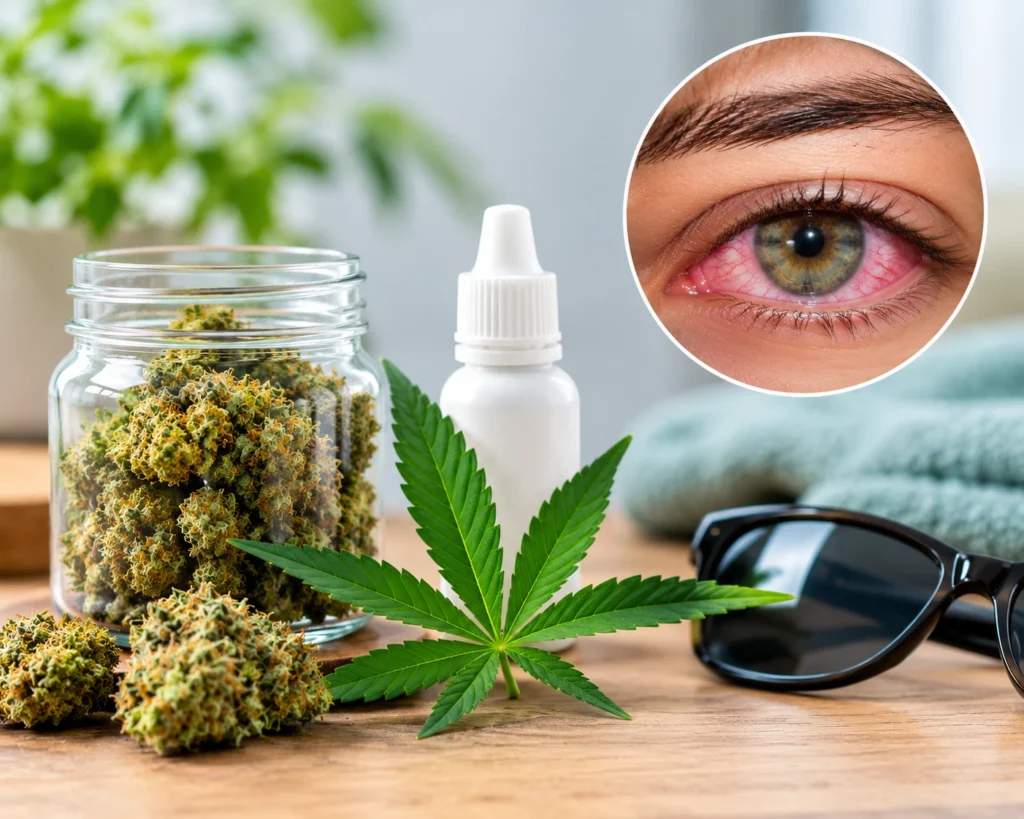
There are numerous immediate physical impacts of smoking cannabis, including dry mouth, altered senses, slow reflexes, and red eyes. Redness of eyes is one of the most noticeable symptoms for many users and can cause irritation or embarrassment.
The positive thing about it is that mild redness can be fixed as soon as the impact of smoking cannabis wears off. Nonetheless, the reasons are different: THC affects blood vessels in eyes, and smoke irritates the surface of the eyes. It is important to understand the difference in order to use proper solutions.
The following article will cover the reasons why smoking cannabis makes your eyes red, seven tips on how to deal with the problem, the dangers of certain eye drops, and the signs to pay attention to.
Want to Learn More About Cannabis Effects?
Explore the causes of red eyes, safe relief options, and important health precautions to make informed decisions about cannabis use.
>>Learn More<<
The reason why smoking cannabis can make your eyes red is because of tetrahydrocannabinol (THC), which is the cannabinoid largely responsible for the psychoactive effects of cannabis.
This cannabinoid acts on the cannabinoid receptors and can cause dilation of the blood vessels in a phenomenon known as vasodilation. If there is dilation of the blood vessels in the conjunctiva—the thin layer of tissue that covers the white part of the eye—then your eyes will become pinkish or bloodshot.
A review conducted in 2024 and published in the journal Clinical Ophthalmology provides information regarding cannabis-induced eye symptoms and the effects on the eyes, such as redness of the conjunctiva and tear production.
The irritation of the eyes is another side effect of being exposed to smoke, leading to watery eyes, burning sensations, or a sandy feeling in the eyes.
The intensity of the redness is influenced by the following:
Consequently, the effects of marijuana smoke can vary significantly from one individual to another.
There is no guaranteed instant treatment for red eyes after smoking cannabis. Yet, these steps might help ease discomfort during your eye recovery process.
1. Try using a cool compress.
One of the simplest methods to relieve irritated eyelids is the use of a cool compress. Take a washcloth, moisten it with cool water, squeeze it, and put it gently on your closed eyes for a few minutes.
Do not use ice and do not put pressure on your eyes; always keep your eyelids clean to avoid any possible infections.
Despite the fact that using a cool compress can help ease the discomfort from red eyes after smoking cannabis, it will not undo the effect of THC.
2. Lubricate Eyes With Artificial Tears for Dry Eyes
There is a lubricating solution for the eyes, which is often referred to as artificial tears, that may be used to alleviate dryness, irritation, and the gritty sensation of burning eyes.
When smoking marijuana causes dry eyes, use artificial tears that will lubricate your eyes according to the recommendations of the product.
When you wear contacts, make sure that the artificial tears will not harm your lenses.
The difference between artificial tears and medicated eye drops is that the lubricating products may help with the problems of dryness, while the redness eye drops may just hide the red vessels of the eyes.
3. Prevent Exposure to Smoke
The smoke could potentially irritate the surface of the eye. Stepping out of the smoky environment to a clean place might prevent any further irritation.
Improved ventilation by opening windows might minimize the amount of smoke present, but it doesn’t remove it altogether. Do not rub your eyes since that would increase the chances of irritation.
Reduced exposure to smoke is especially important when you have any other symptoms such as burning sensations, watering, or discomfort in addition to red eyes from smoking weed.
4. Give Your Eyes a Rest
Various environmental factors can exacerbate the condition of red eyes. These could include use of air conditioning, wind, dry indoor air, and spending long hours on a computer.
You could take a break from using the computer, blink more frequently, and rest in a comfortable environment. The use of a humidifier can be effective if the air indoors is very dry.
None of these steps will help you get rid of THC from your body but will minimize the chances of irritation of your eyes.
5. Maintain Adequate Hydration
Staying hydrated is generally good for health; however, there is little research proving that drinking excessive amounts of water directly clears eye redness caused by smoking cannabis.
In case smoking cannabis leads to dry mouth, it can be alleviated with drinking water; however, it has nothing to do with eye redness.
Artificial tears can provide better relief for the problem of dry eyes rather than increasing hydration.
6. Take Special Care Using Redness-Avoiding Eye Drops
Eye drops with decongestants temporarily contract the blood vessels in the eye and make it appear less red. However, not all people can use such drops.
According to the American Academy of Ophthalmology, decongestant eye drops must be used occasionally and for a short time only. Otherwise, rebound redness may occur with the help of certain drops.
Source: American Academy of Ophthalmology: Redness-Relieving Eye Drops
Before applying any medicated drops for eye redness after smoking cannabis, check the instructions on the label and consult a pharmacist or an eye care specialist if necessary. People suffering from narrow-angle glaucoma and other eye disorders should avoid certain drops with decongestants.
7. Give the Effects Some Time to Wane
Red eye as a consequence of cannabis usage is typically temporary; however, its period depends on different things like THC content, the dose taken, the physiology of an individual, and other health issues.
The Indian Journal of Medical Research mentions that redness of the conjunctiva is one of the ocular effects resulting from the consumption of cannabis. Other eye effects considered include the impact on eye movement and visual perception.
If you experience eye redness after smoking cannabis, let the effects pass instead of using drops to whiten your eyes continuously. It is important to remember that waning redness does not indicate the end of the impairment caused by THC.
The time taken will be different from one person to another depending on the situation. For some, the redness will improve after the effects of marijuana wear off. But there are those who will experience redness for a longer period of time.
In the Oregon Health Authority guide on cannabis and health, it is said that the immediate effects of inhaled marijuana last up to two or four hours. However, the effects vary. The redness of the eyes is not necessarily part of the effects of marijuana.
Some factors that could contribute to redness include THC concentration, dosage taken, individual sensitivity, and any irritant in the eyes.
It should be noted that prolonged redness (over two days), worsening, or frequent recurrence should not necessarily be attributed to smoking marijuana. It might be due to other conditions, including dryness or infection.
The redness of the eyes is just one possible health impact caused by smoking cannabis. There are many other health impacts caused by smoking cannabis, including brain impairment, impaired coordination, breathing problems, and cardiovascular problems.
MedlinePlus says cannabis intoxication may be accompanied by impaired perception, decreased short-term memory, dry mouth, and red eyes. These symptoms are aggravated by increased dosage of cannabis and vary from person to person.
Cannabis inhalation through smoking leads to exposure of the respiratory system to irritant substances included in the smoke. As NIH states, the smoke of cannabis is composed of some similar harmful substances to tobacco smoke and is linked to respiratory diseases.
In case of mild redness that isn’t associated with eye pain or changes in eyesight, it can go away on its own. Nevertheless, all red eyes aren’t safe.
You need to seek urgent treatment in case of:
Consultation with an ophthalmologist is recommended in case of persistent redness or in case of eye discharge.
According to the NHS, intense pain in a red eye, vision changes, sensitivity to light, and a red eye in a contact lens wearer can be symptoms requiring urgent treatment.
Will smoking marijuana always lead to red eyes?
No. For some individuals, there is obvious redness, while for others, redness is minimal or nonexistent. This may depend on the amount of THC, individual sensitivity, and smoke exposure.
Are eye drops able to get rid of redness instantly?
This does not always work effectively. Artificial tear eye drops can help with the dryness issue, while other types of medicated drops can help with reducing redness.
Does drinking water help with red eyes?
Water is an important component for maintaining the proper body hydration, but there is no information that drinking additional water will help you reverse THC-induced redness.
Is having red eyes indicative of cannabis use?
The effects of red eyes may follow cannabis use, but red eyes are not necessarily a sign of cannabis use, since allergies, dehydration, smoke inhalation, tiredness, and even infection could be other causes of red eyes.
Can smoking marijuana affect one’s vision?
Yes. The smoking of marijuana may influence visual perception, eye movements, attention, and coordination. People who suffer from any changes to their vision need to undergo medical evaluation first.
Cannabis smoking could cause redness in the eyes due to the influence of THC on blood vessels, whereas smoking could also lead to dryness and irritation of the eyes. Applying a cold compress, using artificial tears, avoiding any additional irritation, and giving some time for recovery may be helpful in this case.
It is necessary not to use too much medicine for redness, and one should not overlook any sharp pain or changes in vision and prolonged redness.
Medical disclaimer: This article is meant to be used only for educational purposes.
1. Bondok et al. (2024) —
Read the research on PubMed Central
2. American Academy of Ophthalmology —
Read the guidance
3. MedlinePlus —
Read the medical overview
4. NHS —
Read the NHS guidance
5. Indian Journal of Medical Research —
Read the research article
